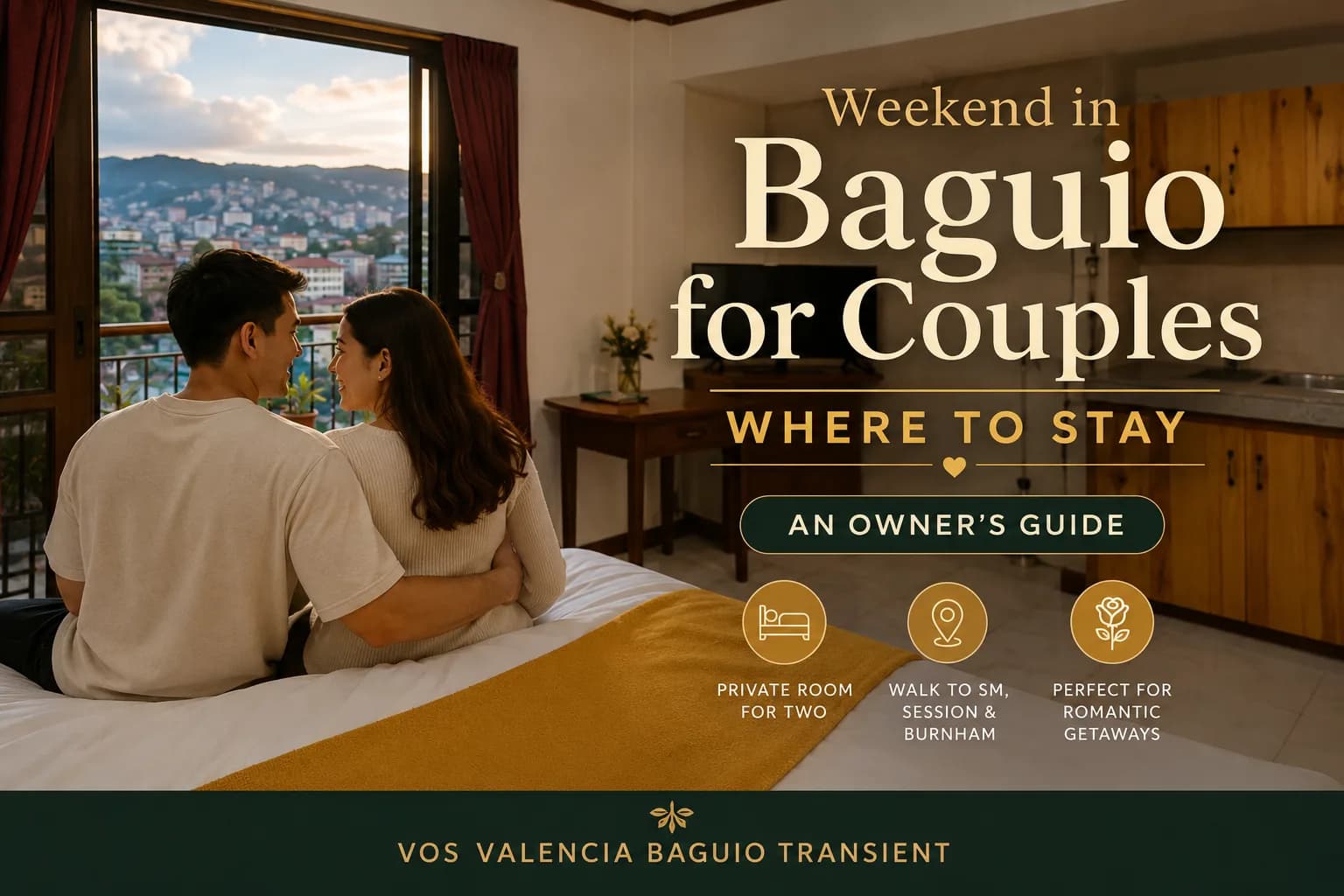
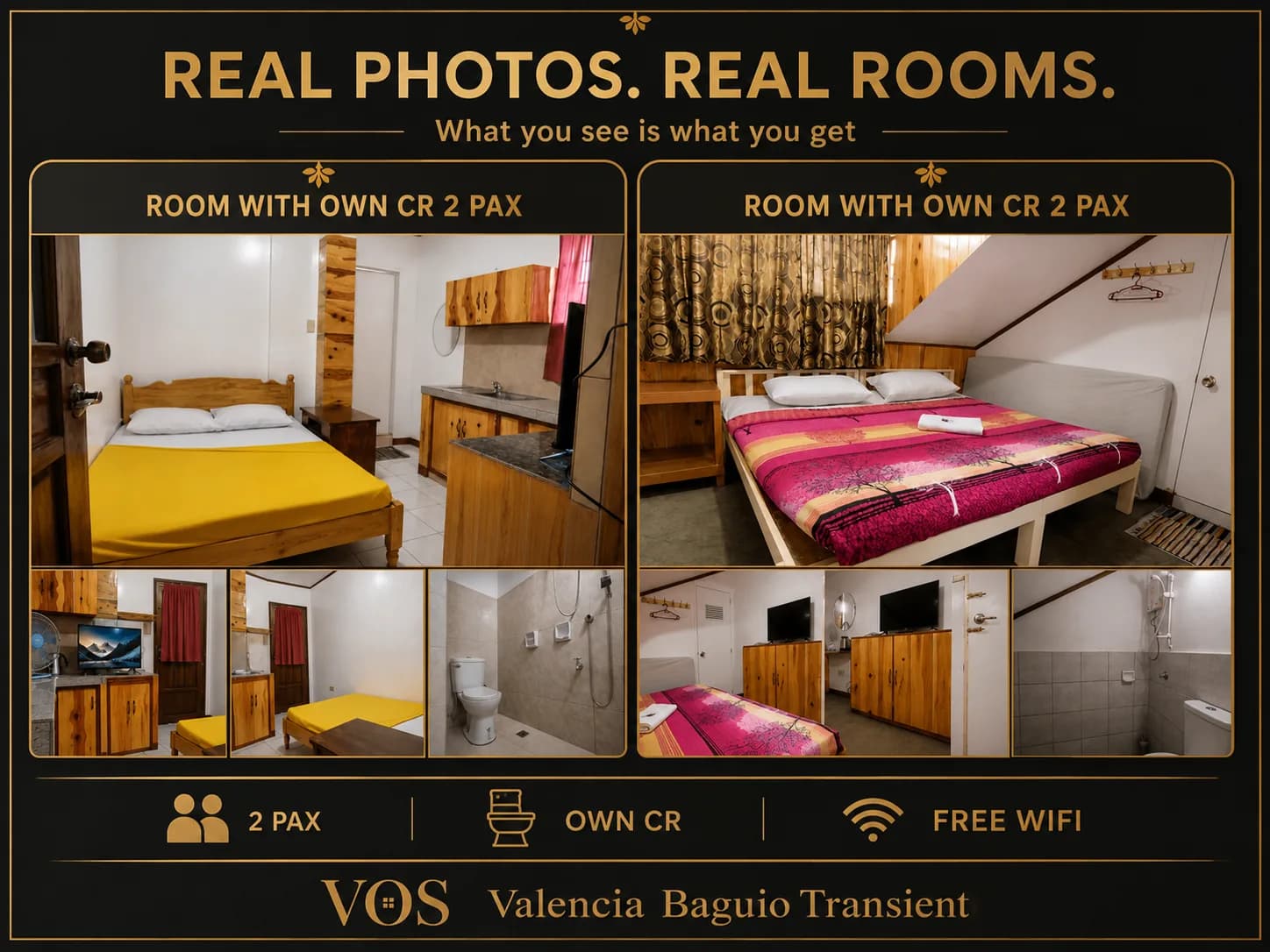
Baguio Transient House for Digital Nomads: An Owner's Honest Guide
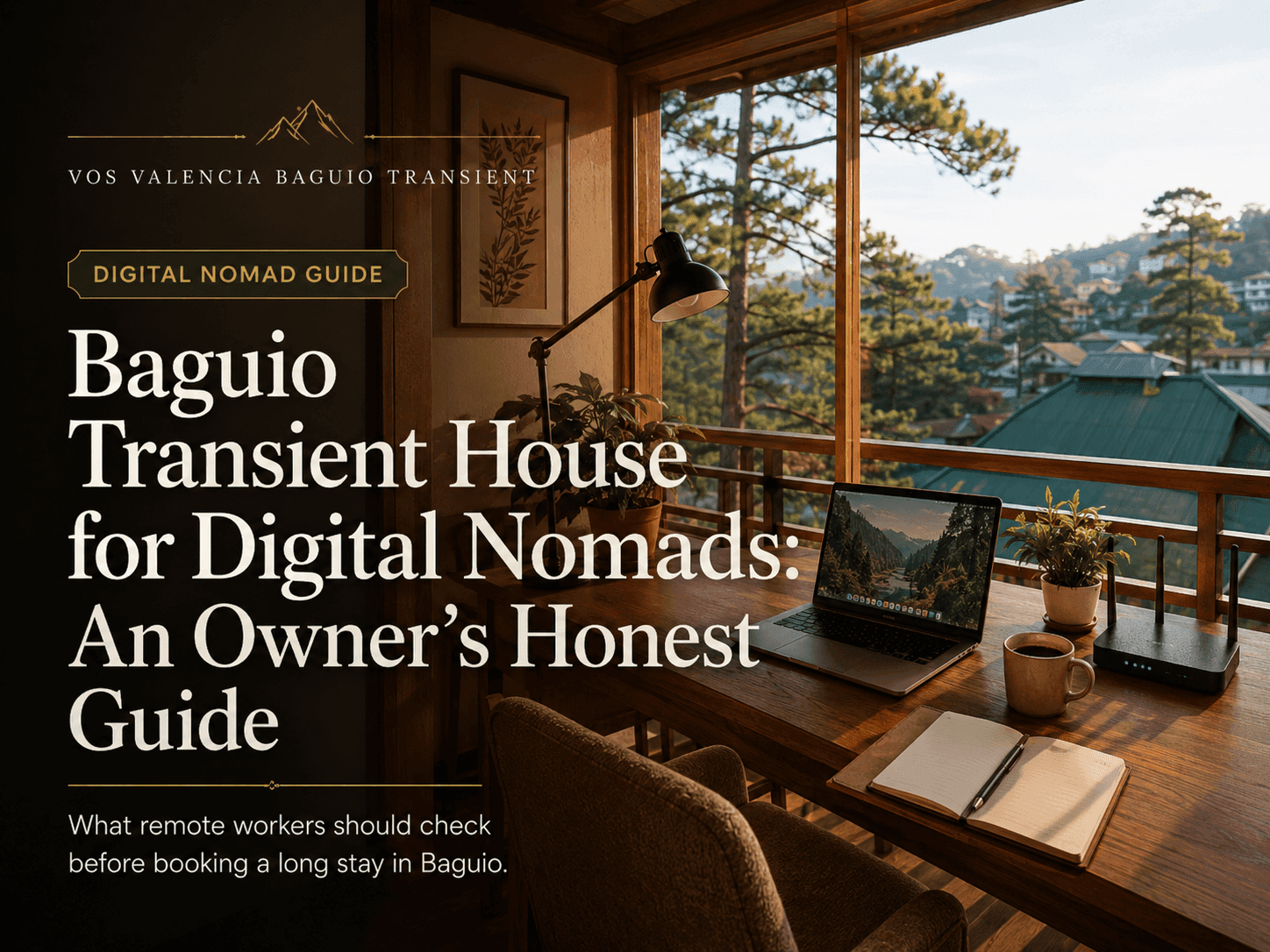
More remote workers are choosing Baguio as a base, and I see it directly in my inbox. I run a Baguio transient house, and every month I get inquiries from people who say the same thing: "I work online, I want to stay for a few weeks or a month, do you have fast WiFi and a place I can work?"
If you are searching for a Baguio transient house for digital nomads, I want to be honest with you from the owner side. Most transient houses in Baguio were built for tourists who stay one or two nights, not for someone who needs to work eight hours a day for a month. The cool weather, the cafes, and the slower pace make Baguio one of the best remote-work cities in the Philippines. But you have to know what to check, because the wrong place will cost you a missed deadline, a dropped call, or a wasted deposit.
This guide is written from real experience hosting long-stay remote workers. If you are a freelancer, online teacher, developer, designer, or anyone escaping the Manila heat while still working, here is what you need to know before you book.
Book Monthly, Not Nightly
The first mistake remote workers make is booking by the night for a long stay.
A transient house in Baguio is short-to-medium-term accommodation you book directly with the owner. Tourists book by the night, so the price you see online is almost always a nightly rate. If you multiply that nightly rate by thirty days, you will pay far more than you should.
Almost every serious owner has a monthly rate, but it is usually not posted online. The public price is built to win weekend tourist bookings. When you message and say you want a full month, the price changes. In many cases a monthly rate is forty to sixty percent cheaper than nightly times thirty, because one guaranteed month is easier for the owner than chasing thirty separate weekend bookings.
So the rule is simple: never accept nightly pricing for a long stay. Ask for the monthly rate directly.
What "Nomad-Ready" Really Means
A place can have beautiful photos, a pine view, and great tourist reviews and still be useless for work. Tourist reviews grade a place on vibe and value for two nights. You are grading it as an office you also sleep in for a month. That is a different checklist.
Here is what I would check before paying anything:
- WiFi, with proof. Do not accept "yes we have WiFi." Ask for a screenshot of a speed test taken inside the unit. A nomad-ready place in Baguio now should have fiber from PLDT, Converge, or Globe, with a real fifty to one hundred Mbps or more. That is enough for video calls, large uploads, and screen sharing.
- A real work surface. A bed is not a desk. Ask if there is an actual table and a chair you can sit at for hours, ideally near a window for light and near the router for signal.
- Hot shower. People forget Baguio is cold, often ten to fifteen degrees in the morning. A working water heater is not a luxury here, it is a need.
- Kitchen access. For a month, eating out three times a day gets expensive and tiring. Even a basic kitchen with a fridge and rice cooker changes your budget.
- Quiet location. Ask what is directly below and beside the unit. A room above a videoke bar or beside a busy terminal will wreck your call schedule.
- A backup plan for brownouts. Power and internet still drop sometimes, more often in the rainy season. Ask what happens during a brownout.
- Walkable to a cafe. A nearby coffee shop with its own fiber is your backup office on a bad connection day.
If an owner can answer all of these clearly and in writing, you found a good one. If they get vague about WiFi proof or electricity billing, keep looking.
The WiFi Truth in Baguio
This is the question I get the most, so I want to be very clear.
The honest truth in 2026 is that most decent Baguio transient houses now run on fiber, and a good one will give you a real fifty to one hundred Mbps or more. That is completely workable for remote work, online meetings, and uploading large files. This is a real improvement from a few years ago when slow DSL was normal.
But "the area has fiber" and "this unit has its own fiber line at usable speed" are two different things. Some houses share one line across many units, so your hundred Mbps becomes very slow at night when other guests are streaming. That is why a speed test screenshot taken inside the actual unit, ideally in the evening, matters more than any promise.
Whatever the line is, bring a backup. A Smart or Globe prepaid SIM in a pocket WiFi or your phone hotspot will carry you through a brownout or a router restart. The 5G signal in central Baguio is strong. Treat the SIM as insurance, not your main connection. If WiFi is your top priority, start with a Baguio transient house with WiFi and confirm the speed before you commit.
What a Monthly Stay Actually Costs
Here is the part nobody quotes honestly.
A genuinely nomad-suitable private unit with fiber, a real desk, hot shower, kitchen access, and quiet usually books in the range of fifteen thousand to twenty-five thousand pesos per month when you negotiate a monthly rate directly with the owner. Below that range you usually give up internet quality, a work surface, or quiet. Above it you are paying for a view, a full house, or peak-season pricing.
Remember the nightly trap. A unit listed at one thousand five hundred pesos per night looks like forty-five thousand for a month, but the real monthly rate the owner will quote is often around eighteen to twenty-two thousand. If an owner refuses to discount for a full month, that tells you something too. It usually means they get enough tourist demand that they are not set up for long stays.
On top of rent, expect food, electricity if it is billed separately, transport, and a few coffee-shop work days. For most remote workers earning in dollars or euros, the total monthly cost of living in Baguio is comfortable, in a cool-climate city, without the crowds of Bali or the heat of the lowlands.
What Our Long-Stay Remote Workers Actually Needed
The most useful thing I can share is the pattern I see from the remote workers who actually book for weeks and then extend.
They do not chase the cheapest room or the prettiest balcony. They book on three things, in this order: a verified internet speed, a confirmed work desk, and a fast, clear answer from the host.
A typical message is something like, "Planning to work remotely from Baguio for a month, what is your WiFi speed, is there a proper desk, and what is your monthly rate?" The ones who book are the ones I can answer instantly and concretely: here is tonight's speed test, there is a desk by the window next to the router, the monthly rate is this, and here is how electricity is billed. The bookings I lose are the ones where I am slow or vague, or the unit honestly is not set up for it.
That pattern changed how I host. I added a real desk and chair near the router in the units I offer to remote workers, I keep a current speed test ready to send, and I quote an all-in monthly rate up front so there is no surprise on the electric bill. Speed and honesty win long stays every single time.
How to Message the Owner and Negotiate
This is the part that saves you the most money and stress. Here is exactly how I would book a long stay, written from the side of the person who receives these messages.
First, lead with the long stay. Open by saying the length and the use. For example: "Hi, I am a remote worker looking to stay one month, flexible dates. I will mostly be working from the unit, so I need to confirm WiFi speed and a work desk. Do you offer a monthly rate?" This signals a serious, low-maintenance booking and front-loads your two dealbreakers.
Second, ask for the monthly rate clearly. If they only give a nightly rate, ask, "What is your best monthly rate for a thirty-day stay paid in advance?" Paying the month up front, or in two halves, is your leverage. It is guaranteed income, so it justifies the discount.
Third, time it right. The rainy months from June to September are when you have the most negotiating power, because tourist demand is lower and owners discount harder for a guaranteed month. Just confirm the brownout backup, since power blips are more common then. A Baguio transient house in the rainy season is often the best value of the year for a long stay. Peak season is the opposite. December to February, Holy Week, Panagbenga, and the summer months get the least discount, so book those early.
Fourth, get every promise in writing in the same chat thread. WiFi speed, whether electricity is included or metered, check-in and check-out, the desk, hot water. A screenshot of the agreement is your receipt and it prevents honest misunderstandings during a long stay.
Fifth, ask about extending. Remote workers extend all the time. A planned month becomes three. Ask at the start, "If I decide to extend, can you hold the same monthly rate?" so you are not bumped for a tourist booking or charged more later.
Be Careful With Scams on Long Bookings
Most Baguio owners are legitimate, but scams exist, and a long booking means more money at risk.
Protect yourself with a few simple steps. Ask for a quick video walkthrough of the actual unit. A real owner can send one in minutes, a scammer using stolen photos cannot. Be careful with anyone demanding full payment to a personal account before you have verified anything. A reasonable deposit to confirm a long booking is normal, but full prepayment to a stranger with no video and no reviews is the classic red flag.
Also check the basics. Reverse image search the listing photos if anything feels off, look at the page history and reviews, and confirm the business name and location make sense. The few minutes it takes to verify is cheap insurance on a month-long booking.
Best Areas for Working Remotely in Baguio
For remote work, location matters in a different way than it does for tourists.
You want to be near cafes, food, and transport, because those are your backup office and your daily breaks. The area around Session Road is ideal for this, since it has cafes, restaurants, fast WiFi spots, and easy access to SM Baguio. A Baguio transient house near Session Road keeps everything you need within walking distance, which is exactly what you want on a busy work week.
Burnham Park is also good if you want green space for breaks and morning walks. Farther areas can work if you have a car or you genuinely want quiet, but during peak season the traffic and limited transport can make a far location stressful. For a working stay, being close to the center usually saves you more time than the cheaper far room saves you money.
Recommended Places to Compare
If you want to compare options, you can check BaguioTransient.net for transient-style listings and local accommodation options.
You can also browse BookBaguio.com when comparing Baguio stays and direct booking options, and it is a good place to start if you want a place that is set up for long remote-work stays.
For a higher-end whole-property stay with more space to work, VOS Villa is also worth checking as part of your comparison.
Use these links to compare, but still ask the important questions. Lead with "remote worker, monthly stay, need WiFi proof and a desk," and you will quickly see which owners are ready for you and which are not.
Frequently Asked Questions
Is the internet in Baguio transient houses good enough for remote work? In the right unit, yes. Good Baguio transient houses now run on fiber delivering a real 50–100+ Mbps — fine for video calls, screen sharing, and large uploads. Always ask for a Speedtest screenshot taken inside the unit, and carry a Smart or Globe 5G SIM as backup for brownouts.
How much does a transient house cost per month for a digital nomad in Baguio? A nomad-suitable private unit with fiber, a desk, hot water, and kitchen access runs roughly ₱15,000–₱25,000 per month when you negotiate a monthly rate directly with the owner — often 40–60% cheaper than the nightly rate times thirty.
Can you negotiate a monthly rate at a Baguio transient house? Yes. Most owners have a monthly rate they do not post publicly. Ask for their best monthly rate for a 30-day stay paid in advance. The rainy months of June to September give you the most negotiating power because tourist demand is lower.
What should a remote worker check before booking a long stay in Baguio? Verified fiber speed with a Speedtest screenshot, a real desk and chair, working hot water, kitchen access, a quiet location, and whether electricity is included or metered separately. Get all of it confirmed in writing before sending any money.
Is Baguio a good base for digital nomads? Yes — 15–20°C weather means no aircon bills, there is a strong cafe culture, fiber is widely available, and monthly costs undercut Manila and Cebu. All-in monthly cost of living typically lands around ₱27,000–₱56,000 depending on lifestyle.
Final Advice
Baguio is a genuinely great base for remote work. Cool weather, no aircon bills, strong coffee, fast fiber in the right units, and monthly rates that undercut every other major Philippine city. But transient houses were built for weekend tourists, so the whole game is filtering for the small share of places that are actually set up for a month of work, then booking them on a monthly rate instead of nightly times thirty.
Do the three things that matter. Ask for a speed test screenshot before you believe any WiFi claim. Negotiate an all-in monthly rate. Verify the place is real with a video before sending money. Get those right and you can live and work well here for a comfortable monthly cost. Get them wrong and you will spend your first week hunting for a cafe with working WiFi.
Now you know the questions to ask. As an owner, I promise you the good ones will be happy you asked.
Oliver Valencia
Co-owner, V.O.S. Valencia Baguio Transient House
LinkedInOliver and his mother have been running V.O.S. Valencia in Baguio City since 2019. Having hosted 50k of guests — couples, families, barkadas — Oliver writes from real local experience. If you have questions about visiting Baguio, he's the person to ask.